A CREDIBLE ALTERNATIVE TO 100% HYDROGEN FOR DECARBONIZING INDUSTRIAL ACTIVITIES.
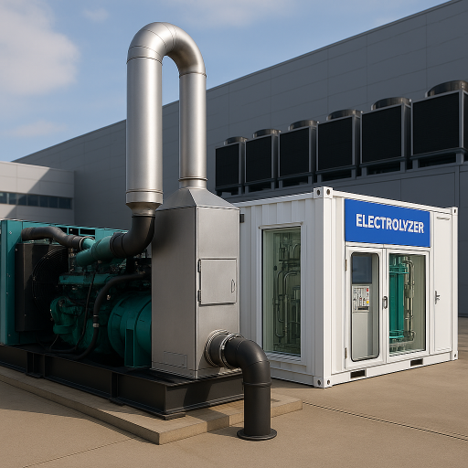
While hydrogen is often presented as the cornerstone of the energy transition, its development raises numerous technical, economic and safety challenges. A new technology, based on recycling CO₂ from combustion fumes and converting it into e-fuels such as methanol, opens up a simpler, more pragmatic way of accelerating the decarbonization of industrial activities.
A simpler path to decarbonization
- The CO₂ is no longer rejected, it is recovered.
- The process is based on proven technological building blocks: electrolysis, catalysis and flue gas recycling processes.
Integration is therefore less disruptive for operators than the outright abandonment of fossil fuel combustion in favor of an all-hydrogen economy.
Reduced transport and storage risks
Hydrogen has major risks due to its very low density and high flammability. INERIS reports point out that its storage imposes severe safety constraints (material embrittlement, explosion risks, leak detection)【INERIS, 2021】. Conversely, molecules such as methanol are liquids at room temperatureThey are well known to the chemical industry, and already have mastered storage and logistics standards【IEA, 2021】. This considerably reduces operational complexity and risks for operators.
Technology complementary
- The flue gas recycling process with electrolytic oxygen generator consumes the CO2 from combustion, produces methanol and generates the oxygen required for combustion and heat production.
- This on-site production process eliminates the need to transport and store large quantities of hydrogen.
- The methanol industry is already mature : numerous catalytic processes exist and global infrastructures for production, transport and use are in place (e.g. marine fuel, base chemicals)【Olah et al., 2018】.
This gives rapid deployment to the CO₂ recycling solution.
The limits of hydrogen
Despite its theoretical advantages, hydrogen faces a number of obstacles:
- No infrastructure : transport and distribution require colossal investments【Hydrogen Council, 2020】.
- Security : risks of explosion and leaks (material embrittlement phenomenon)【INERIS, 2021】.
- Competitiveness : cost still too high compared with alternatives such as methanol, ammonia or synthetic biofuels【ADEME, 2022】.
Conclusion
Rather than relying solely on hydrogen, decarbonization will also involve solutions pragmatic, cost-effective intermediaries. Recycling CO₂ from combustion fumes into e-methanol is a perfect illustration of this logic :
- immediate reduction in emissions,
- economic value,
- mature and safe technologies.
A strategy that combines industrial realism and energy transition.

Related articles
See all articles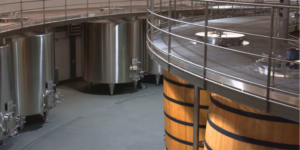
CO2 risk in wine cellars: prevention and safety
Each year, the grape harvest period recalls a reality that is often underestimated: the carbon dioxide (CO₂) resulting from fermentation constitutes one of the main risks in wine cellars. Invisible, heavier than air, and capable of rapidly replacing oxygen, it can cause severe illness or even fatal accidents when it accumulates in the […]
W Platform raises over €1M to accelerate CO₂ valorization
Two years after a first fundraising round of 2 million euros which made it possible to industrialize its fermentation CO₂ capture solutions, W Platform announces a new financing round of more than 1 million euros. This financing round was led by the VitiRev Innovation fund and managed by the Demea Invest teams, in association with [...]

W Platform unveils its new visual identity
The mission of W Platform remains unchanged: to capture, analyze, and valorize CO₂ and gaseous effluents within a circular economy framework. But since the company's inception, our expertise, our solutions, and our ambitions have evolved considerably. To support this transformation, we have chosen to update our image. Today, W Platform unveils […]
Supercritical CO₂: a technological lever for sustainable, high-performance extraction.
In a world seeking more environmentally-friendly industrial processes, the search for organic solvent substitutes is a daily quest for a large number of manufacturers. Among the emerging solutions, supercritical carbon dioxide (CO₂ SC) is establishing itself as a breakthrough technology in many fields, from cosmetics to [...]

W Platform awarded Young Innovative Company (JEI) status
We are proud to announce that W Platform was awarded official status as a Young Innovative Company (JEI) last May! This recognition marks a key stage in our development, and recognizes our team's constant efforts to place innovation and eco-design at the heart of our projects. Recognition of our commitment to innovation [...].