CO2 RISKS IN WINE CELLARS: PREVENTION AND SAFETY
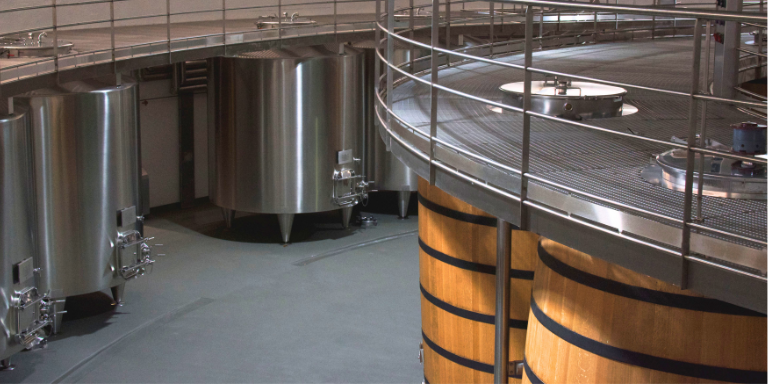
Each year, the grape harvest season recalls a reality that is often underestimated: the carbon dioxide (CO₂) resulting from fermentation constitutes one of the primary risks in wine cellars.
Invisible, heavier than air, and capable of rapidly displacing oxygen, it can cause severe illness or even fatal accidents when it accumulates in low-lying areas.
While CO₂ capture and utilization represent a tremendous environmental and economic opportunity today, they must imperatively be accompanied by an appropriate prevention strategy.
Why is CO₂ dangerous in a wine cellar?
Carbon dioxide naturally produced during fermentation has several characteristics that make it particularly dangerous:
- He is invisible;
- It is generally odorless;
- It is heavier than air and accumulates in pits, tanks or the lower parts of buildings;
- It acts as an asphyxiant gas by decreasing the concentration of available oxygen.
Unlike other industrial gases, the CO₂ does not trigger an immediate sensation of alertA person can lose consciousness without perceiving the danger.
What are the effects of CO₂ on the body?
It is important to note that the risk depends not only on the concentration of CO₂ in the air, but also on the duration of exposure.
To assess this risk, The INRS relies on Occupational Exposure Limits (OELs), which define the maximum concentrations to which an employee may be exposed without any known adverse health effects. In France, the indicative regulatory VLEP for carbon dioxide is set at 5,000 ppm (9,000 mg/m³) over an average 8-hour workday.
In other words, a high concentration for a brief period does not have the same consequences as prolonged exposure. That is why continuous monitoring of concentrations, combined with appropriate warning systems, is essential to protect workers in wineries.
However, the first effects on the body may appear at higher concentrations, as shown in the table below.
The first effects appear as soon as the concentration increases:
| Concentration | Effects |
| 3,000 to 5,000 ppm | Accelerated breathing, headache |
| 5,000 ppm | Increased respiratory rate |
| 10,000 ppm | Fatigue, feeling hot, decreased alertness |
| 20,000 ppm | Severe headaches, rapid breathing |
| >5 % | Risk of serious health problems that may become irreversible with prolonged exposure |
One of the most common accidents is also known as the “rescuer’s trap”: a person attempts to rescue an unconscious coworker without respiratory protection and becomes a victim of the oxygen-depleted atmosphere themselves. That is why any intervention in a hazardous area must be carried out according to an appropriate procedure.
Regulations require that emissions be limited at the source
Preventing CO₂ risks is not just a matter of following best practices.
Article R.4222-12 of the Labor Code provides that:
“Emissions in gaseous form (…) are eliminated (…) whenever production techniques permit. Otherwise, they are captured as they are produced, as close as possible to their source, and as efficiently as possible.”
This approach is also the one recommended by the MSA and the Labor Inspectorate during inspections conducted at wineries.
In other words, capturing CO₂ at the source is currently one of the most effective ways to reduce the risk in the long term.
Beyond Sampling: Continuously Monitoring Concentrations
Capturing CO₂ is the first step.
But safety also depends on continuous monitoring of the atmosphere.
W Platform helps its clients implement systems that enable them to:
- the optimal placement of CO₂ sensors based on the cellar's layout;
- real-time display of concentrations with clearly identified alert thresholds;
- the automatic sending of SMS alerts when critical thresholds are reached;
- remote monitoring of measures via a centralized platform;
- Ensuring reliable communication between sensors and the platform through a dedicated LoRaWAN infrastructure.
Example of an improvement implemented at a winery
As part of an on-site support initiative, several optimizations were deployed at Château Latour in 2024 to enhance team safety:
- repositioning of the sensors to improve the detection of sensitive areas;
- Graphical interface modification with visualization of minimum and maximum thresholds and visual alert starting at 1,500 ppm;
- setup of an SMS alert starting from 5,000 ppm, with configuration of sending frequencies and notification time slots;
- improved reliability of data feedback thanks to a new SIM card dedicated to the LoRaWAN network.
These adjustments allow for more responsive monitoring and better anticipation of at-risk situations.
A connected platform to enhance security
Risk prevention today relies on tools capable of centralizing data and alerting the right people at the right time.
The WP Data platform developed by W Platform notably allows:
- to visualize real-time CO₂ concentrations;
- to receive alerts when defined thresholds are exceeded;
- to view the measurement history;
- to supervise several sites remotely from a single interface.
It constitutes an essential complement to capture equipment to ensure continuous monitoring of the facilities.
Conclusion
CO₂ risk prevention cannot rely on a single measure.
It combines several levers:
- gas capture at the source;
- early detection of abnormal concentrations;
- automatic alerts;
- remote monitoring
- team awareness
By bringing together these various systems, wine farms sustainably improve operator safety while valorizing the CO₂ resulting from fermentation.
The grape harvest is approaching: have you checked that your winery is ready to handle the CO₂ risk?
Find the main control points to check before and during fermentations in our CO₂ safety checklist.

Related articles
See all articles
W Platform raises over €1M to accelerate CO₂ valorization
Two years after a first fundraising round of 2 million euros which made it possible to industrialize its fermentation CO₂ capture solutions, W Platform announces a new financing round of more than 1 million euros. This financing round was led by the VitiRev Innovation fund and managed by the Demea Invest teams, in association with [...]
W Platform unveils its new visual identity
The mission of W Platform remains unchanged: to capture, analyze, and valorize CO₂ and gaseous effluents within a circular economy framework. But since the company's inception, our expertise, our solutions, and our ambitions have evolved considerably. To support this transformation, we have chosen to update our image. Today, W Platform unveils […]
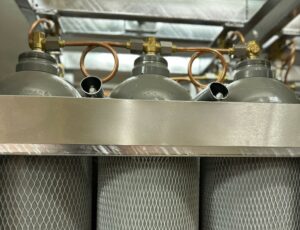
Supercritical CO₂: a technological lever for sustainable, high-performance extraction.
In a world seeking more environmentally-friendly industrial processes, the search for organic solvent substitutes is a daily quest for a large number of manufacturers. Among the emerging solutions, supercritical carbon dioxide (CO₂ SC) is establishing itself as a breakthrough technology in many fields, from cosmetics to [...]

W Platform awarded Young Innovative Company (JEI) status
We are proud to announce that W Platform was awarded official status as a Young Innovative Company (JEI) last May! This recognition marks a key stage in our development, and recognizes our team's constant efforts to place innovation and eco-design at the heart of our projects. Recognition of our commitment to innovation [...].
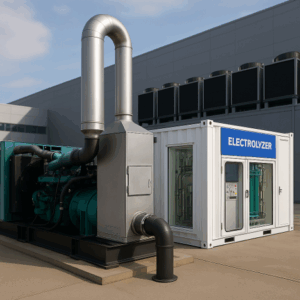
A credible alternative to 100% hydrogen for decarbonizing industrial activities
While hydrogen is often presented as the cornerstone of the energy transition, its development raises numerous technical, economic and safety challenges. A new technology, based on recycling CO₂ from combustion fumes and converting it into e-fuels like methanol, opens up a simpler, more pragmatic way of accelerating [...]